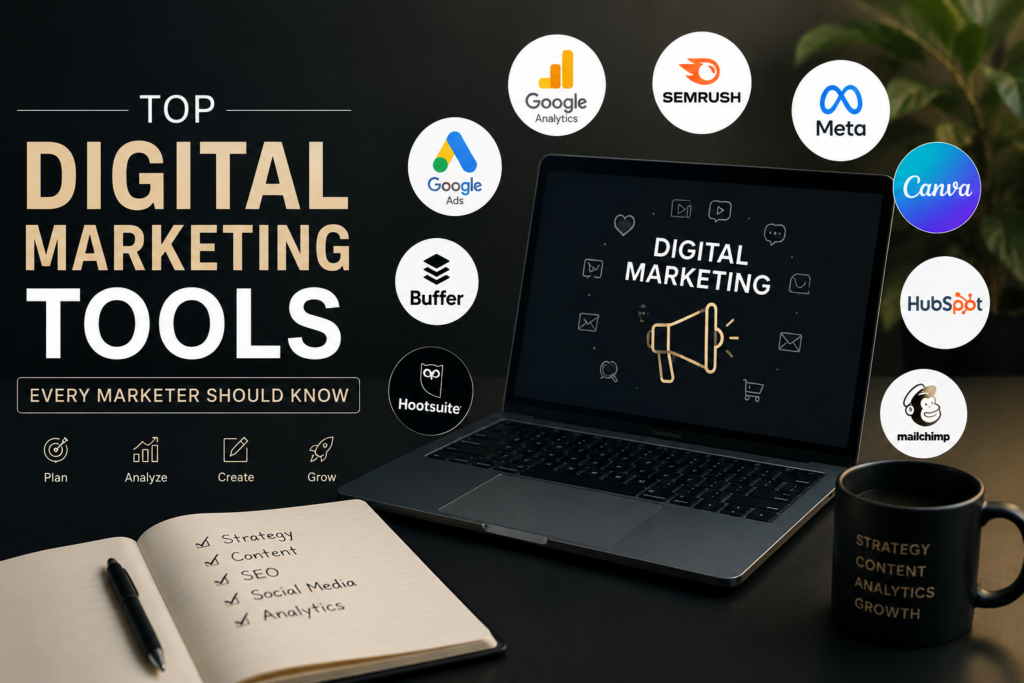
Introduction to Digital Marketing Tools
In the contemporary landscape of marketing, digital tools have emerged as indispensable assets for professionals aiming to enhance their strategies and achieve better results. Digital marketing tools encompass a range of software and online applications that assist marketers in various aspects of their campaigns, from analytics and customer engagement to content creation and social media management.
The significance of these tools cannot be understated, as they provide valuable insights that guide decision-making and optimize marketing efforts. For instance, tools that analyze website traffic can reveal user behavior and preferences, allowing marketers to tailor their content to better meet the needs of their audience. This analytical approach paves the way for more effective targeting and improved Return on Investment (ROI).
Moreover, digital marketing tools often facilitate automation, enabling marketers to save time and resources while maintaining effective outreach. Email marketing platforms, for example, can schedule campaigns and segment audiences, streamlining the process of communication with potential and existing customers. Additionally, social media management tools allow marketers to engage multiple platforms from a single interface, keeping their brand presence strong and consistent across various channels.
As a result, the use of digital marketing tools plays a crucial role in enhancing workflow efficiency and effectiveness. Marketers who remain aware of the tools available to them are better equipped to innovate their strategies and keep pace with the rapidly evolving digital landscape. In this article, we will explore various essential digital marketing tools every marketer should be aware of, providing insights into how they can leverage these resources to drive success in their marketing endeavors.
Social Media Management Tools
In the rapidly evolving landscape of digital marketing, social media management tools have become indispensable for marketers aiming to streamline their strategies and enhance engagement. These tools not only simplify the process of managing multiple social media accounts but also provide insightful analytics that can guide marketing decisions. Among the most popular platforms available today are Hootsuite, Buffer, and Sprout Social, each offering unique features to help marketers optimize their social media presence.
Hootsuite is renowned for its comprehensive dashboard, allowing users to manage multiple social media networks from one interface. This tool facilitates the scheduling of posts across various platforms, enabling marketers to reach their audience at optimal times without needing to be present. Additionally, Hootsuite provides in-depth analytics that give users insights into their performance metrics, helping them fine-tune their strategies based on real-time data.
Buffer is another favorite among social media marketers due to its simplicity and effectiveness. With Buffer, users can easily schedule and publish content across different platforms while also using its browser extension for seamless content sharing. Beyond scheduling, Buffer offers analytics features that track engagement metrics, empowering marketers to make data-driven decisions regarding their social media content.
Sprout Social stands out with its robust engagement tools and customer relationship management features. It allows marketers to respond to messages and comments directly from the platform, facilitating real-time interaction with their audience. Additionally, its detailed reporting capabilities can help identify patterns in audience behavior, which can be instrumental for tailoring future campaigns to better meet consumer preferences.
In conclusion, the integration of social media management tools such as Hootsuite, Buffer, and Sprout Social into marketing strategies can significantly enhance overall effectiveness. By utilizing these platforms, marketers can streamline their operations, improve engagement, and gain valuable insights into their social media performance, ultimately leading to more successful digital marketing initiatives.
Search Engine Optimization (SEO) Tools
In the ever-evolving landscape of digital marketing, Search Engine Optimization (SEO) is a crucial component that dictates the visibility and ranking of websites across search engines. A myriad of SEO tools are available today, aiding marketers in enhancing their online presence through more effective strategies. Among these, prominent names such as Moz, SEMrush, and Ahrefs stand out for their comprehensive offerings.
Moz, well-known for its user-friendly interface, provides an assortment of features including keyword research, link building, and site audits. Its Keyword Explorer tool helps marketers identify high-potential keywords that can effectively drive traffic, while the domain analysis allows for thorough insights into competitors’ backlink profiles, enabling users to strategize accordingly.
SEMrush, on the other hand, offers an extensive toolkit that spans beyond basic SEO functionalities. It encompasses content marketing, advertising research, and social media tools, making it an all-in-one solution for marketers. Particularly, SEMrush’s Position Tracking feature helps users monitor keyword rankings closely, ensuring that they stay ahead in the competitive digital marketplace.
Ahrefs is another vital player known for its powerful backlink analysis capabilities. This tool enables marketers to analyze their own backlink profiles as well as those of competitors, providing a clearer picture of link equity and authority. Additionally, its Site Explorer function offers deep insights into organic search traffic and keyword rankings, making it invaluable for identifying high-value opportunities for growth.
In leveraging these tools, digital marketers significantly enhance their ability to optimize websites, improve search engine rankings, and ultimately, drive more organic traffic. By integrating insights gained from these advanced SEO tools into their marketing strategies, businesses can ensure they maintain a strong online presence in a crowded space.
Email Marketing Platforms
Email marketing remains a vital component of digital marketing strategies, allowing businesses to communicate effectively with their audience. A variety of email marketing platforms have emerged, providing robust tools for creating, managing, and automating email campaigns. Each platform has unique features that can cater to different marketing needs, making it essential for marketers to select the right tool for their objectives.
One of the most popular email marketing platforms is MailChimp. This user-friendly tool offers a range of features including customizable templates, audience segmentation, and comprehensive analytics. Marketers can easily design visually appealing emails that resonate with their target audience. Additionally, MailChimp’s audience segmentation allows users to tailor their messages to specific groups, optimizing engagement rates.
Another noteworthy platform is Constant Contact, which is particularly favored by small businesses for its ease of use. Constant Contact provides various templates and drag-and-drop tools to streamline the email creation process. It also offers features like list segmentation and social media integration, making it easier for marketers to enhance their campaigns and track performance metrics.
SendinBlue is an up-and-coming option that combines email marketing with SMS messaging capabilities. This platform is known for its automation workflows, enabling users to design complex campaigns that can be triggered based on user behavior. With SendinBlue, businesses can send relevant content at the right time, further enhancing customer engagement and retention.
In conclusion, selecting the right email marketing platform is crucial for enhancing communication and engagement with customers. By leveraging tools such as MailChimp, Constant Contact, and SendinBlue, marketers can create effective email campaigns that yield measurable results through features such as segmentation, analytics, and customization. The right choice can significantly influence a brand’s success in the digital marketing landscape.
Content Creation and Management Tools
In the realm of digital marketing, effective content creation and management are paramount for engaging audiences and achieving business objectives. Marketers are increasingly relying on various tools designed to streamline these processes, enhancing overall productivity and content quality.
One of the most popular tools for written content is Grammarly. This writing assistant not only checks for spelling and grammatical errors but also offers stylistic suggestions to improve the clarity and impact of your writing. By incorporating Grammarly into their workflow, marketers can ensure that their content is not only error-free but also effectively communicates the intended message. This tool is particularly beneficial for those who handle a significant amount of written content, whether it be blog posts, social media updates, or email newsletters.
Another essential tool in the content creation arsenal is Canva. Known for its user-friendly interface, Canva allows marketers to create visually stunning graphics without requiring extensive design skills. With a vast library of templates, images, and design elements, Canva empowers marketers to produce eye-catching visuals that can elevate the overall quality of their marketing materials. This tool is especially useful for social media campaigns that rely heavily on visual content.
Furthermore, a reliable content management system (CMS) is critical for organizing and publishing content efficiently. WordPress stands out as a leading platform that offers marketers a robust framework for managing their websites and blogs. Its versatility allows users to customize their sites, optimize content for search engines, and engage with audiences through various plugins and themes. A well-structured CMS like WordPress not only helps in managing content but also enhances accessibility and user experience.
In conclusion, the implementation of effective content creation and management tools such as Grammarly, Canva, and WordPress can significantly improve a marketer’s workflow and the quality of produced content. Utilizing these tools ensures that marketing efforts are both efficient and impactful, ultimately leading to better audience engagement and business success.
Analytics and Reporting Tools
In the realm of digital marketing, the ability to measure performance and analyze data is paramount. Analytics and reporting tools serve as the backbone of effective marketing strategies, providing marketers with invaluable insights into user behavior, campaign effectiveness, and overall performance metrics. Among numerous available options, Google Analytics stands out as a cornerstone platform widely adopted across the industry.
Google Analytics enables marketers to track website traffic, user engagement, and conversion rates. By examining pages viewed, time spent on the site, and the pathways users take through a website, marketers can identify trends and patterns that inform their strategies. Furthermore, Google Analytics offers demographic data, helping marketers understand their audience better and tailor their content accordingly.
Another robust tool that has gained popularity in recent years is Tableau. Known for its powerful visualization capabilities, Tableau allows users to create interactive, shareable dashboards that simplify complex data sets. Marketers can use Tableau to integrate data from multiple sources and visualize this information through graphs and charts, making it easier to identify actionable insights.
Other noteworthy analytics platforms include Adobe Analytics and SEMrush, each offering unique features and advantages. Adobe Analytics provides comprehensive data integration and a variety of ways to segment audiences, while SEMrush shines in its competitive analysis and SEO reporting capabilities.
Ultimately, while the tools themselves vary in functionalities and features, their common goal remains the same: to empower marketers to make data-driven decisions. By leveraging analytics and reporting tools, marketers can assess the effectiveness of their campaigns, optimize performances, and strategize more effectively for future marketing initiatives.
Customer Relationship Management (CRM) Systems
Customer Relationship Management (CRM) systems are vital tools for modern marketers, providing essential capabilities to manage and analyze customer interactions throughout the customer lifecycle. These tools help marketers enhance relationships with potential and existing customers, ultimately driving business growth and improving customer retention.
One of the most widely recognized CRM platforms is Salesforce. This robust system offers a comprehensive suite of features designed to streamline various aspects of customer relationship management. Salesforce enables marketers to efficiently track leads, forecast sales, and gather valuable insights into customer behavior. Additionally, its advanced reporting tools allow businesses to analyze sales data and assess performance trends, facilitating informed decision-making.
Another popular CRM tool is HubSpot, which is particularly well-regarded for its user-friendly interface and extensive marketing automation capabilities. HubSpot provides marketers with tools to create personalized customer experiences through email marketing, landing pages, and social media integration. The platform’s CRM system is designed to help businesses organize their contacts, monitor customer interactions, and prioritize prospects based on their engagement levels. This functionality significantly enhances lead tracking and ensures that sales teams can focus their efforts on the most promising opportunities.
Both Salesforce and HubSpot emphasize the importance of personalized customer service. By leveraging CRM data, marketers can tailor their communications and offers to meet the specific needs and preferences of individual customers. This personalized approach not only enhances customer satisfaction but also fosters loyalty, leading to higher conversion rates and increased revenue.
In conclusion, CRM systems like Salesforce and HubSpot are essential digital marketing tools that can significantly enhance customer relationship management. By effectively utilizing these systems, marketers can improve their lead tracking processes, enhance sales forecasting accuracy, and deliver personalized customer service that ultimately supports business success.
Pay-Per-Click (PPC) Advertising Tools
In the realm of digital marketing, Pay-Per-Click (PPC) advertising is an essential strategy that drives targeted traffic to websites and increases conversions. To streamline and optimize these campaigns, marketers can leverage a variety of PPC advertising tools that enhance their ability to manage keywords, set budgets, and monitor ad performance effectively.
One of the most prominent platforms is Google Ads, which offers a robust suite of features designed for comprehensive PPC management. With Google Ads, marketers can conduct extensive keyword research to identify the most effective terms that potential customers are using in search engines. This tool allows users to create tailored ad campaigns that are both location-based and audience-targeted, ensuring that ads reach the right people at the right time.
Another noteworthy tool is Bing Ads, which serves as a valuable alternative to Google Ads. Though it holds a smaller market share, Bing Ads can offer unique opportunities due to its less competitive nature. Users can benefit from features like advanced targeting options and detailed performance tracking, similar to what Google Ads provides. By utilizing Bing Ads, advertisers can reach audiences that may not be as easily accessible on other platforms.
Both Google Ads and Bing Ads provide insights into ad performance through various metrics such as click-through rates (CTR), conversion rates, and cost-per-click (CPC). By consistently analyzing these metrics, marketers can make informed adjustments to their campaigns, optimizing their budgets and enhancing overall advertising effectiveness. Moreover, these tools often integrate with analytics platforms, allowing for a more seamless flow of data and insights, which further aids in refining marketing strategies.
Overall, the adoption of PPC advertising tools like Google Ads and Bing Ads is crucial for marketers aiming to improve their online visibility and conversion rates. By leveraging these resources, marketers can execute data-driven decisions that lead to successful advertising outcomes.
Conclusion: Choosing the Right Tools for Digital Marketing Success
In today’s fast-paced digital landscape, the significance of utilizing the right digital marketing tools cannot be overstated. As marketers navigate through various platforms and methods, the effectiveness of their campaigns often hinges on the tools they choose to leverage. With an overwhelming array of options available, it becomes crucial for professionals in the field to strategically evaluate their specific needs and align those requirements with the tools that will facilitate their marketing objectives.
Digital marketing tools are designed to streamline efforts, enhance productivity, and ultimately drive better results. Whether through social media management software, SEO optimization tools, or analytics platforms, each tool plays a vital role in developing a comprehensive marketing strategy. The awareness and understanding of these tools empower marketers to analyze campaigns more effectively and to make data-driven decisions that propel them toward their goals.
Furthermore, as trends and technologies continue to evolve, the importance of staying updated with the latest tools and innovations only grows. Marketers should remain proactive in assessing which tools offer the best functionality and integration options that suit their strategies. By doing so, they can ensure that they remain competitive and responsive to changes within the digital marketing environment.
In conclusion, the right selection of digital marketing tools can significantly enhance marketing efforts and overall success. Marketers are encouraged to thoroughly evaluate their specific needs, consider the range of available tools, and select those that align most closely with their strategic objectives. By investing time in choosing the appropriate tools, marketers can position themselves for sustained success in their campaigns and continue to engage effectively with their audiences.